[vc_row css_animation="" row_type="row" use_row_as_full_screen_section="no" type="grid" angled_section="no" text_align="left" background_image_as_pattern="without_pattern" z_index="" css=".vc_custom_1628781701987{background-color: #c1c1bf !important;}" el_class="protestBanner"][vc_column width="2/3" css=".vc_custom_1628495036789{margin-top: 5% !important;margin-bottom: 6% !important;padding-right: 5% !important;padding-bottom: 40px !important;padding-left: 5% !important;background-color: rgba(0,0,0,0.75) !important;*background-color: rgb(0,0,0) !important;}"][vc_column_text el_class="whiteText"]
Print, Protest & the Polls: The Path to the First Female Vote
[/vc_column_text][vc_empty_space height="10px"][vc_column_text el_class="whiteText"]
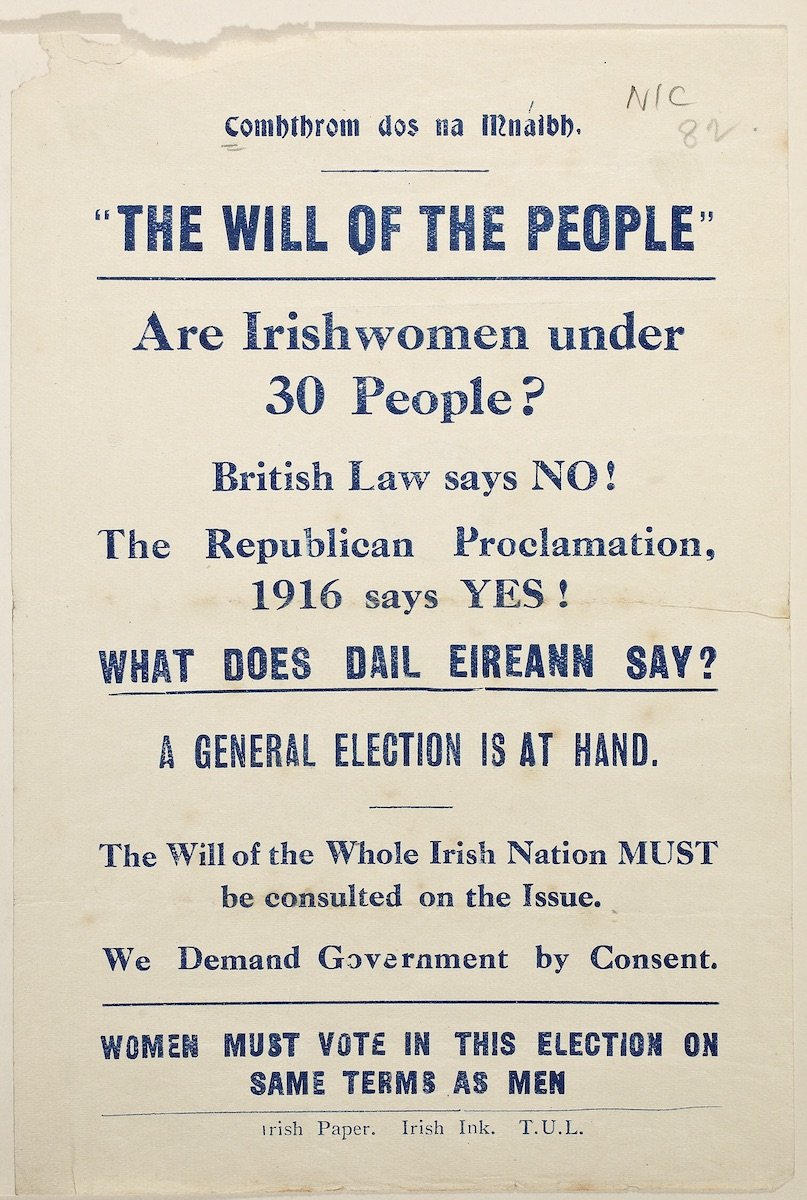
The Representation of the People Act was introduced to Parliament in 1918, which allowed for a select number of women (meeting certain criteria) to vote. This was preceded by a number of political and societal influences resulting from the outbreak of World War I in 1914, and the Easter Rising in Ireland in 1916.
The introduction and overview page for the Print, Protest & the Polls exhibition is here.
[/vc_column_text][/vc_column][vc_column width="1/3" css=".vc_custom_1628495164376{margin-top: 2% !important;margin-bottom: 2% !important;}"][vc_single_image image="10232" img_size="large" alignment="center" qode_css_animation=""][/vc_column][/vc_row][vc_row css_animation="" row_type="row" use_row_as_full_screen_section="no" type="grid" in_content_menu="in_content_menu" content_menu_icon="" angled_section="no" text_align="left" background_image_as_pattern="without_pattern" z_index="" el_class="vc_rowSummer2021" anchor="census" content_menu_title="Anti-sentiment"][vc_column width="1/2" el_class="topAligned"][vc_column_text]The Home Rule Bill for Ireland was passed in 1914, but the outbreak of the First World War in the same year postponed its enactment. The War divided the Irish suffragists, with some stepping back from suffrage activities to help in the war effort, and others distancing themselves from the events to continue to focus on suffrage. The struggle for Irish independence came to the fore for many politically involved women, with the formation of nationalist organisations such as the all-female auxiliary force of Cumann na mBan, and the Irish Citizen Army, which recruited men and women equally. An estimated three hundred women played a role in the 1916 Rising in Ireland. The 1916 Proclamation of the Irish Republic directly addressed the issue of female suffrage, stating that Ireland’s future National Government would be “elected by the suffrages of all her men and women”.